Up Your Alley: Old-school cool at the beating heart of Bedok
SINGAPORE: In that location is a chilled-out, old-school vibe to Bedok, something you lot can feel once you prepare human foot in this neighbourhood in eastern Singapore.
Residents say this is a place that runs on a different tempo, jokes aside about its proper noun alluding to a heartbeat (say "Bedok" twice and you'll get it), or to "bedoh", the Malay give-and-take for drum.
"What a lot of Eastsiders say is that nosotros still keep it real," said former journalist and Bedok resident Kane Cunico. "It'south a lot more gentrified at present. Yeah, information technology's a lot more affluent, information technology's got a lot more hip cafes and restaurants. Katong and Joo Chiat are on steroids right now, and it's just so mod and absurd, simply it retains its grapheme.
"It's not pretentious and there's a certain sense of 'lepak-ness' (Malay for "laidback") in the East that people would testify to. Closer to the beach likewise, there'south a very laidback kampung-type vibe versus Holland Village or Thomson Road, which are landlocked.
"The eastward has the sometime-world amuse."
CNA speaks to him and other past and present residents to find out more than about hidden gems in this character-filled locale in our latest Up Your Alley episode:
LEK LIM NONYA CAKE CONFECTIONERY: KUEH LIFE

In an unassuming shophouse at 84 Bedok North Street 4 lies a nyonya kueh confectionery that has been passed down three generations.
Nonetheless it was merely fortuitous that the family even had the business organisation to start with.
Gavan Sing, the 41-yr-old proprietor, told CNA that his grandpa and female parent started operations dorsum in the 1960s, thanks to the generosity of a nyonya who painstakingly taught them all that she knew, such as kueh dadar (rolled pandan-flavoured pancake with sweetened grated kokosnoot filling).
"Dorsum and then, nyonyas did not share their recipes. Information technology's like a family unit hole-and-corner," he explained. "This particular nyonya, she was very open-minded. She shared every recipe she knew and taught stride-by-step how to do the kueh.
"That's how my mother and gramps learned from her and, from there, started the kampung kitchen."
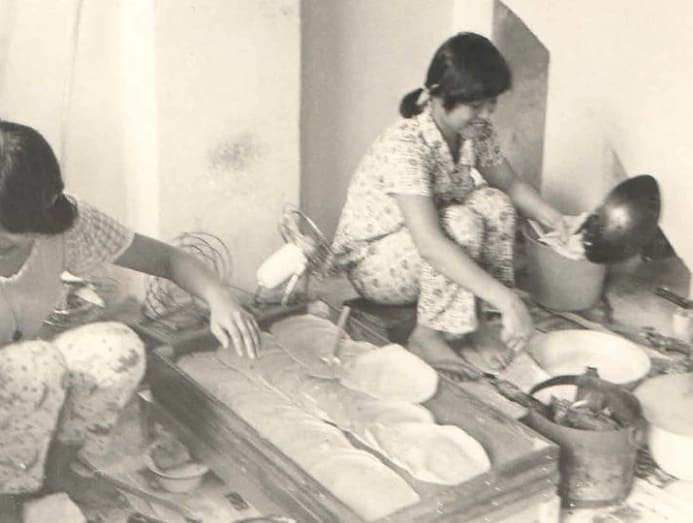
When that kitchen was forced to shut, the family upped stakes and moved to its electric current location at Bedok North Street four in 1979. It'southward been home to Lek Lim Nonya Cake Confectionery ever since, said Gavan.

Its offerings have widened through the years - from kueh dadar and peppery red ang ku kueh to the colourful, multi-layered kueh lapis - to preserve the popularity of these kueh.
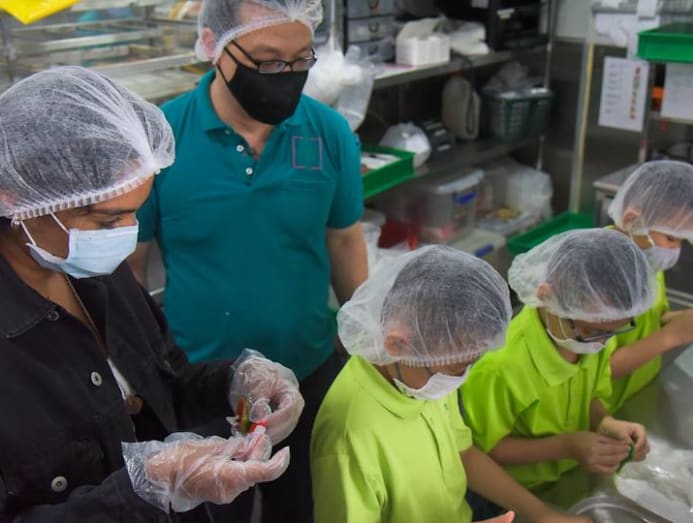
Gavan said the younger generation is less inclined to eat kueh today because sure traditional practices, such equally grandparents giving such sweetness treats to their grandchildren who assist with chores, are dying out.
But he hopes the confectionery'southward tried-and-tested recipes will eventually win out and larn a new generation of kueh lovers. "We do what we do best which is to provide expert kueh for the residents and what I hope is that information technology does add together to the flavour (of Bedok)," Gavan said.
BEDOK RESERVOIR: FOUNT OF MEMORIES
Despite Bedok'south credible old-world charm, alter, it appears, is a abiding for those who live there.
And there's no one amend to recount these changes to the neighbourhood than 74-year-sometime Yeo Hong Eng, who has lived there his whole life, starting at Tanah Merah Kechil, where he spent his childhood years later on the Japanese Occupation.
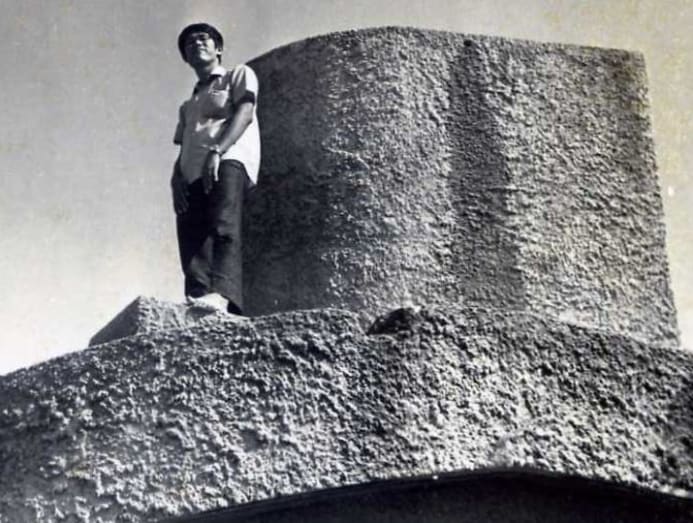
Growing up, Yeo saw traces of World War II in the pillboxes and quondam massacre sites, farms, coconut and rambutan estates, streams and a hilly landscape boasting views of sprawling valleys.
"When nosotros were young, we used to become upward the ridge and expect down. It was beautiful when you looked down into the meadows," he recalled.
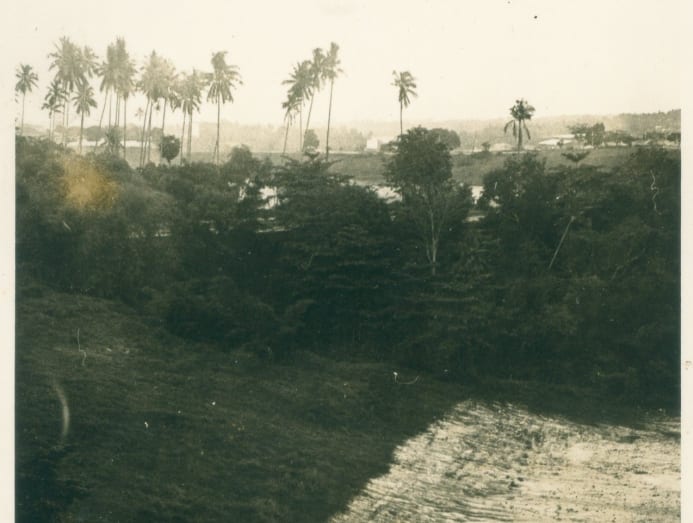
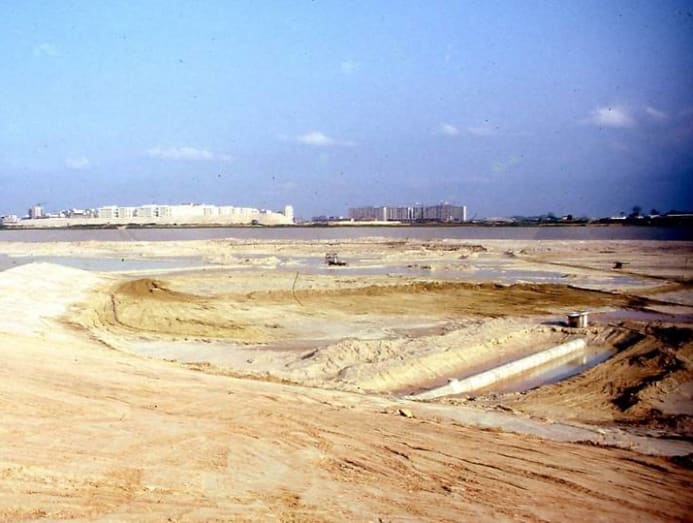
Past the 1960s, state reclamation piece of work had started. It would strip the town of its natural peaks and valleys, only did not rob the place completely of its dazzler. Sand, at that time, was in demand and the original hill where Bedok Canal is today was brought down to facilitate the digging.
"They dug so deep it became 5m below sea level!" Yeo said, as he looked out at the h2o body.
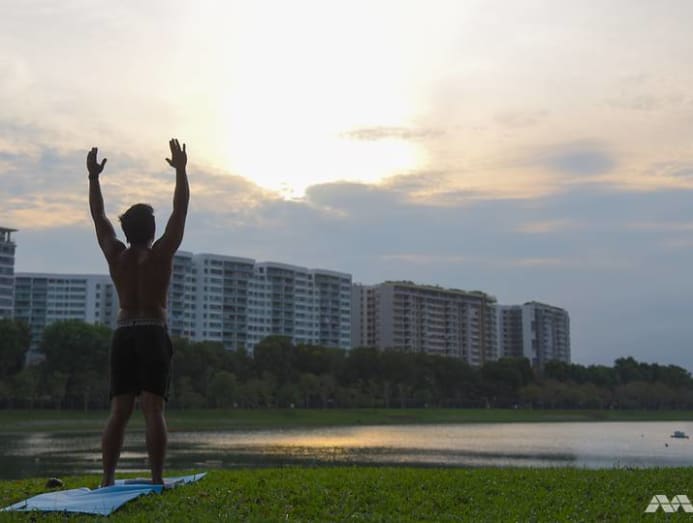
Despite the changes over the years, the neighbourhood remains love to him. And then much so the septuagenarian penned his memories in a volume titled The Little Cerise Cliff (the literal translation of Tanah Merah Kechil) to share his memories with the younger generation.
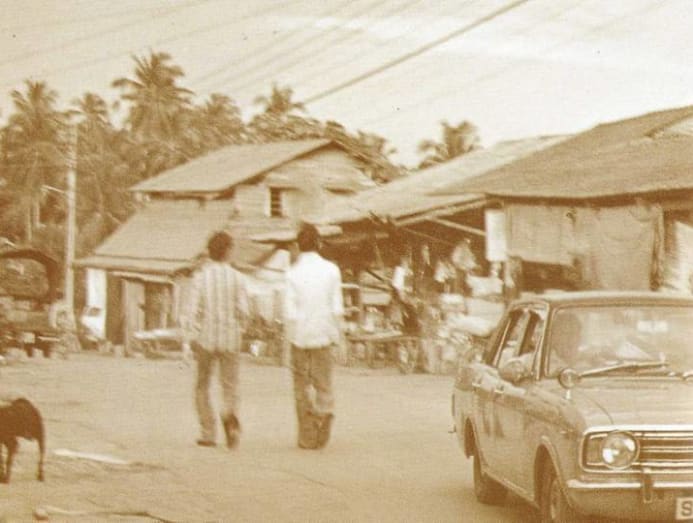
"When yous grow up in the expanse, you tend to have an attachment to it. These early on memories you lot can never erase from my heed."
HUA YU WEE RESTAURANT: WHERE Time STANDS However
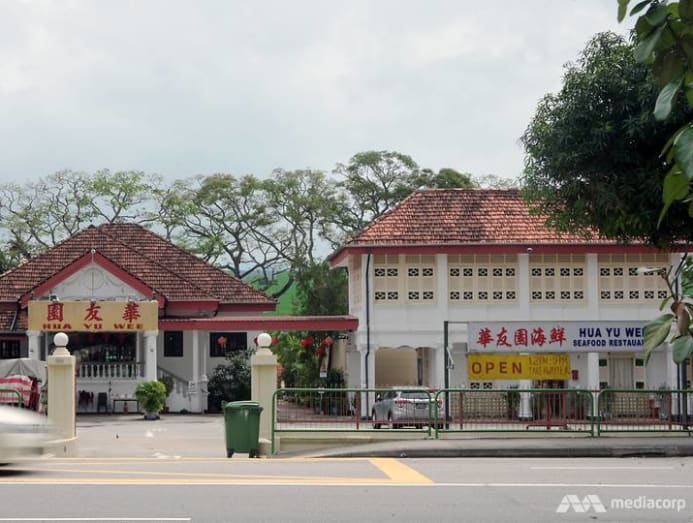
At another spot in Bedok stands a seafood restaurant seemingly untouched by fourth dimension or tide.
Hua Yu Wee, at Upper East Coast Road, is housed in an unassuming pre-war bungalow with a gated compound and parking expanse which fills upwards in the evenings as cars line up to catch a spot.
The jostling for infinite is not unfamiliar to 41-twelvemonth-old Kane, whose family has been frequenting the eating place since he was a boy. And its charm has grown on him over the years, particularly as things like the old hopscotch squares where he used to play at during his childhood visits remain intact.
"Hua Yu Wee was really packed, (had) neon lights and people could smoke indoors. It was similar old-schoolhouse Singapore, upward until at least the early 1990s," he said, recalling the sea of cars that used to line both sides of the street as they waited to plough into the compound.
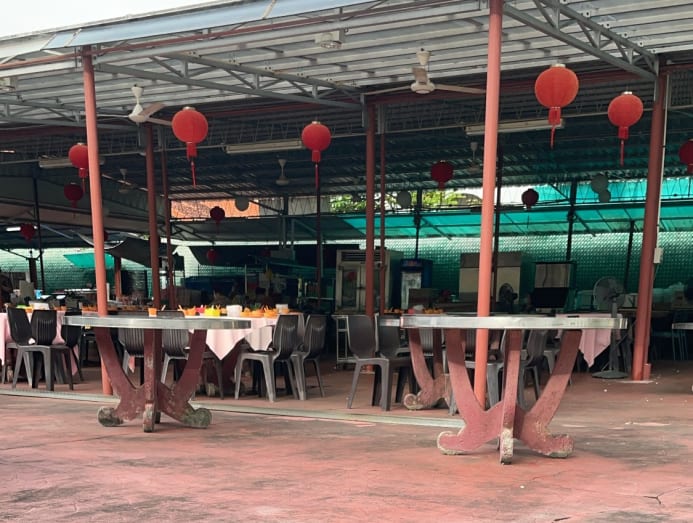
Today, everything remains the aforementioned to him, except indoor smoking is no longer allowed, he pointed out.
The restaurant also embodies the spirit of the eastward, retaining its old-school vibes and sticking with its location instead of moving to somewhere swankier.
"If you are an Eastsider, you appreciate different things here, only information technology is centered around nutrient," said Kane. "It'due south all near nutrient in the East."
And Hua Yu Wee still pulls in the crowds, with patrons who are both locals and expatriates. "To me, I don't call up of it as a Chinese seafood restaurant; I but think it's this really overnice melting pot where fourth dimension stands still," he said.
BEDOK'S SKATER BOYS
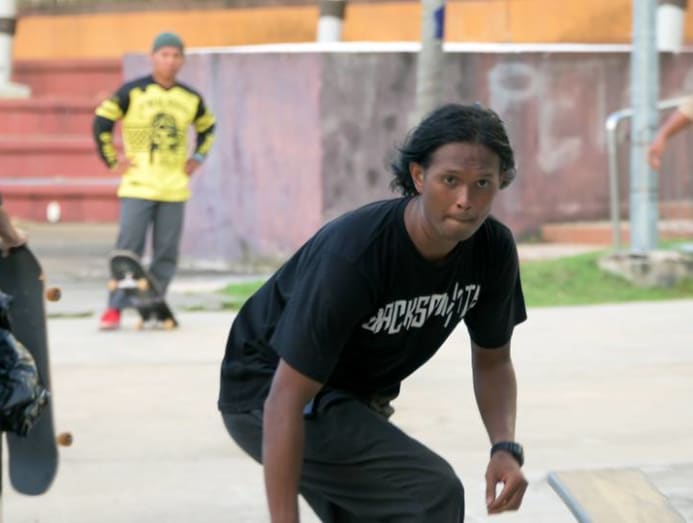
Did you know Bedok had a thriving skateboarding scene in the early on 2000s?
It was and so much of a describe, Mohamad Hafiz ("Bolo" to his friends), a secondary schoolhouse student when he was first introduced to the sport, thought up means and means to stay in the neighbourhood.
"I didn't live in Bedok, but I wanted to stay (there) because my friends were all in Bedok. So I take an aunt who stays in Bedok and I went to her and said: 'Delight can I stay in your house and then I tin skate during my holidays here'," he recounted.
It was too in Bedok that he found his crew, who taught him the ropes in the diverse skate parks in the town then. He had previously picked up tricks like the "ollie" (leaping in the air on the board without holding on to it) using skateboards sold at Toys 'R' Usa.
More than two decades on, he is both an avid skateboarder and coach for adults and children alike.
Continuing at the Eunos Harmony Hub Skate Park, the last remaining skate park in Bedok, Hafiz was joined past RunBDK – a group of skateboarders and lifelong friends drawn to the neighbourhood.
"Nosotros are known equally the Bedok boys, simply initially we needed an identity to stand for ourselves and then we used RunBDK. (It) was formed 15 years ago and had twenty-plus members initially," said one of the cadre members of the grouping, Ahmad Faizal.
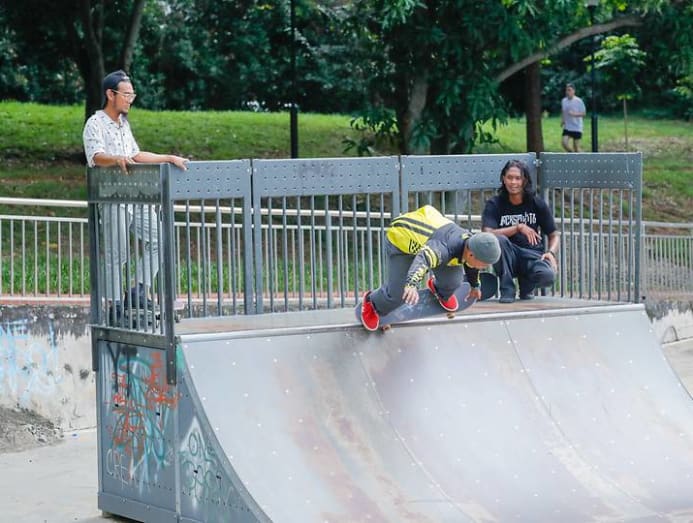
"I felt in that location was a demand to form a group because (while) skateboarding is nigh individualism, I think nosotros function improve equally a group. E'er since then, we've been participating in competitions… and been around the world entering competitions and filming videos to contribute to the community," the 32-year-sometime said.
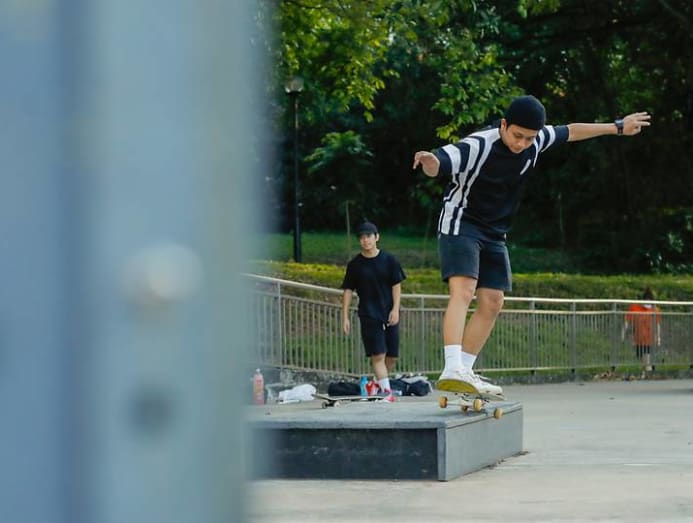
But it's non just the sport that encapsulates Bedok's skateboarding culture.
Ahmadexplained: "Information technology has evolved into many other areas like music, hip hop culture, rock culture and dissimilar kinds of co-activities that relate to information technology … the fashion we see it, Bedok is non just about skateboarding - it'due south a culture."
Fifty-fifty as they reminisce almost the by, Hafiz best-selling that this civilization is no longer as potent and pervasive every bit it used to be.
Hafiz recalled that Heartbeat@Bedok used to exist Bedok Adventure Park, a stomping basis for skateboarders as information technology had wooden obstacles and a skating bowl for those who love extreme sports. "I think at that place were four or five skate parks in Bedok, but not whatever more now because there's a large skate park in East Coast," he said.
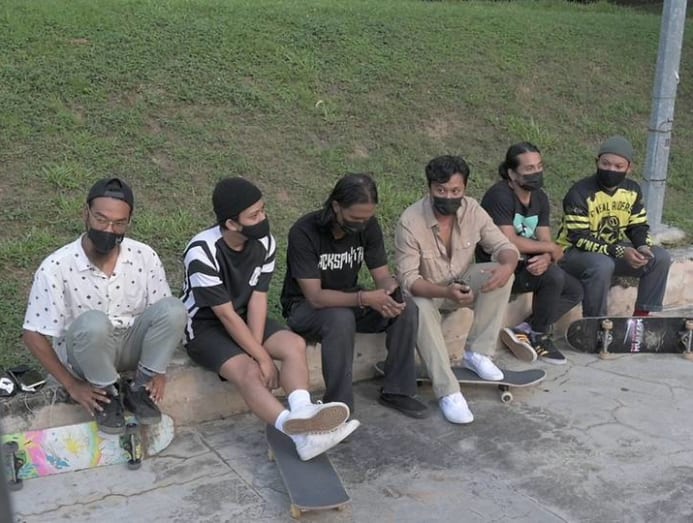
"This sport is not about competition, it'south about having fun with the circle," said 31-year-old Muhammad Firly, some other member of RunBDK.
"It'south about friendship and brotherhood. (Without skateboarding), I'd probably exist out in the streets doing illegal stuff … It's not really a good neighbourhood, but we make adept out of it."
LIMPEH BARBERSHOP: Cutting THROUGH STEREOTYPES
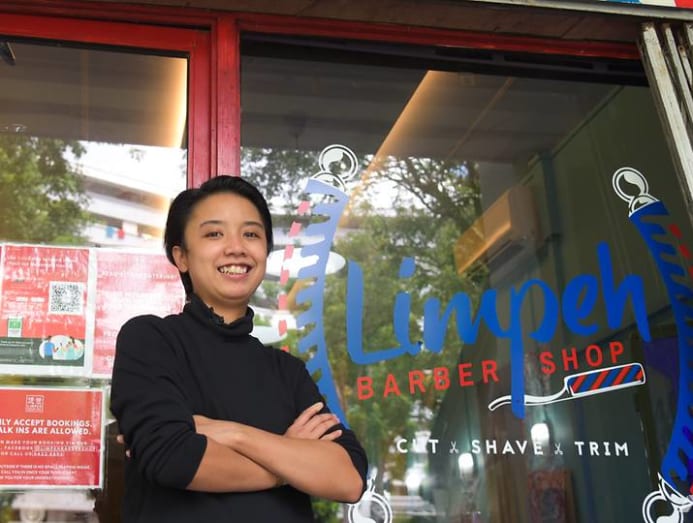
As some strive to retain their hard-earned identities, in that location are others in Bedok forging new ones. Siti Rafidah, a 28-yr-old barber and budding entrepreneur, is one such candidate.
Her business organisation, Limpeh Barbershop, has shaken up what most consider as a staid, male-dominated manufacture. The shop located at 537 Bedok North Street 3 gives off a retro vibe with its eye-catching interior and lights.
Much like her business, she's not afraid to upend the established social club.
"When I use (the name) Limpeh Barbershop, people will always await a shop with Chinese barbers – the stereotypes are e'er there," said Rafidah, who switched from being a graphic designer to men's grooming to pursue her involvement.
"I'll explain that that's the reason why I named it Limpeh Barbershop. I want you to come up into the shop and not have any expectations … be open up to expecting quality haircuts, merely not expecting a item person of a particular race to give you that haircut," she added.
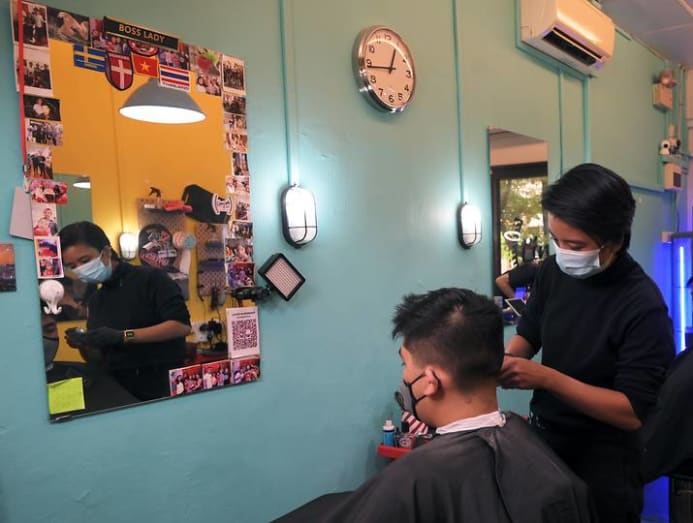
Rafidah too had her work cut out for her every bit a female barber in a male-dominated trade.
"For the longest time, if I have new customers, they volition usually judge me (as) a female person barber. I know that at the dorsum of their minds, they're thinking: 'Can this lady cut my hair like how I usually go my hair cut from a male person barber?'"
"I don't fight against what they believe. But if I evidence what I can do, they volition definitely change the style they think," she added.
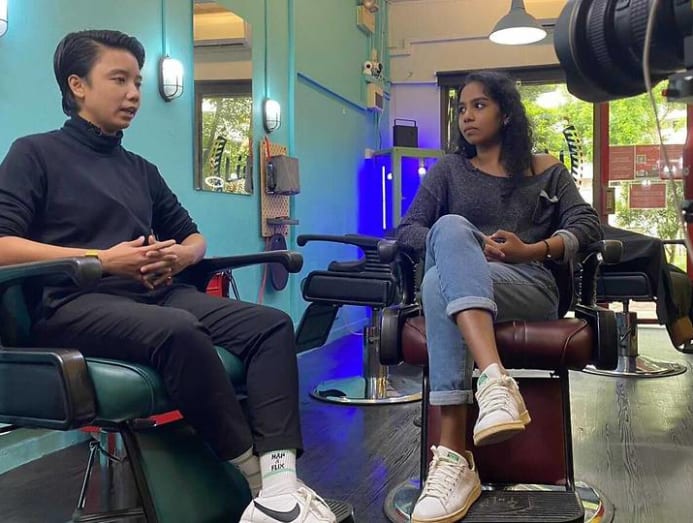
Beyond breaking stereotypes, the long-time Bedok resident besides desires to do more for the youths in the neighbourhood.
Growing up, Rafidah said she saw "things that kids shouldn't know of" similar drugs and the peddling of illegal goods. To foreclose today's youth from going astray, she would invite some of them for a costless haircut and use the time to offering advice and provide a positive influence for them. This has in turn allowed them to open upwards to her with their challenges.
"Kids present, they tend to mix with the wrong visitor, then when you have more shops that are hip, more shops that are relatable to them, they tend to want to stay in the neighbourhood," she said.
"The haircut is a secondary thing. To me, information technology's simply a bridge to get to know people. Then my responsibleness is if kids come in, and they come from a cleaved family, I desire to make a difference to them (and show) that there's hope in life."
She added: "Doesn't mean that if you come from a broken family you accept to be cleaved forever."
Now it's your plough. Nosotros'd like you to tell us what's Upwards Your Alley. What is it that makes your neighbourhood unique? What are the places visitors may not notice at first glance, only are a unique and intrinsic part of the estate y'all know and love?
Write to us at digitalnews [at] mediacorp.com.sg or bulletin us on Instagram or Facebook. Tell us about some of your favourite spots or about a person who embodies the spirit of the expanse.
Nosotros wait forwards to hearing from y'all!
Source: https://cnalifestyle.channelnewsasia.com/singapore/up-your-alley-singapore-bedok-east-food-skateboarding-barber-185716
0 Response to "Up Your Alley: Old-school cool at the beating heart of Bedok"
Post a Comment